



 +86 18368240367
 Jasonhardware@foxmail.com

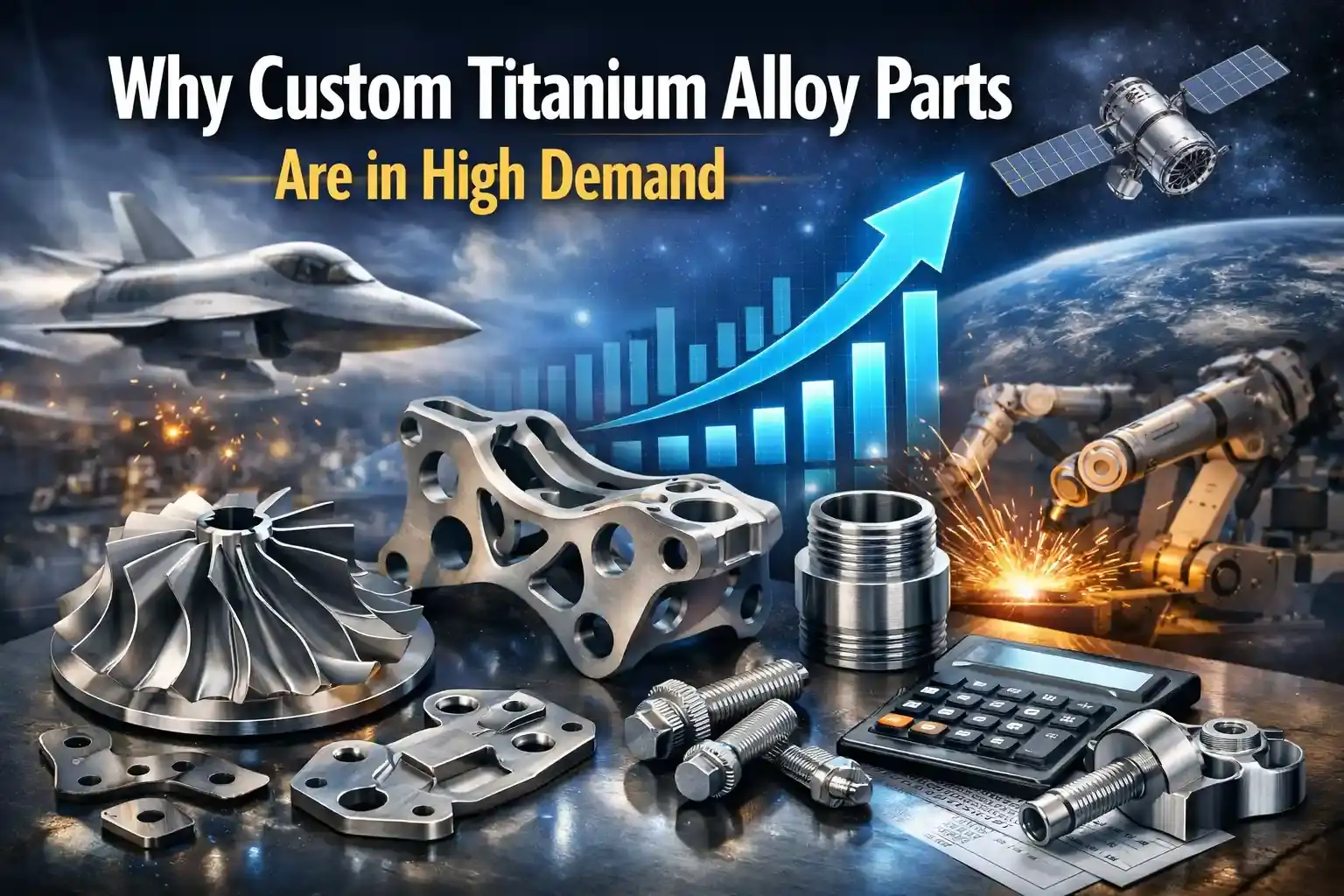
Some materials stand out. One of these is titanium. It is strong. It is light. And it does not rust or break down easily. For these reasons, it is regarded as one of the most desired metals for use in today's production. The need for custom titanium parts continues to rise in various industries, and there's no better reason than their usefulness.
Titanium belongs to the elements that exist in nature. When combined with other metals such as aluminum or vanadium, titanium forms alloys. These alloys are even stronger and more versatile than titanium by itself.
Some of the most challenging environments on earth, and beyond, are those that incorporate titanium alloy components. Titanium's durability withstands stress, high temperatures, and extreme environments, as is seen in aircraft engines and surgical implants.
This is the large one. Titanium is outstanding for this ratio. This is because titanium is extremely strong for its weight. Steel is also strong but heavy. Aluminum weighs less but is not as strong. Titanium is right in the sweet spot!
Why This Ratio is Important in the Real World
Consider an airplane. That additional weight equates to additional fuel consumption. Engineers would like parts that operate safely under stress but are not too heavy. Titanium provides just that.
It can be applied to the medical world, sports goods, racing cars, and a wide range of other products. The lighter the thing, the greater the performance. The stronger the strength, the longer the life. Both qualities come from titanium.
Designed for Stress Management
Titanium alloys are resistant to very high mechanical loads. They are not easily bent, cracked, or fatigued. They resist pressure and will not disintegrate upon repeated pressure. This makes it ideal for parts that are constantly subjected to load and movement, and thus are prone to corrosion.
Lasting Corrosion Resistance
Rusting metals can cause trouble. They get weaker over time. They require a lot of care. They can go wrong at the very moment! This is not a problem for titanium.
This forms a thin oxide layer when exposed to air or water. This layer is similar to a shield. This blocks any further reaction with the environment. This will keep the metal from rusting or corroding, whether it is coated or treated.
Works in Harsh Environments
This allows it to be used in saltwater, chemicals, and in extreme temperatures. Corrosion-resistant materials are used in ships, offshore platforms, and chemical processing plants. These are where titanium is perfectly suited.
So many industries have replaced the use of stainless steel with titanium just because there is less maintenance in titanium. If maintenance can be reduced, so can costs in the long run.
Each application has its own unique features. A medical implant must have a different shape from an aerospace bracket. A marine fastener must be different from a sports bike fastener. Standard parts are not necessarily designed to meet these particular requirements. Hence, custom-made titanium parts are of great importance.
Custom parts are designed and manufactured specifically. They fit perfectly. They work as they should. Function and safety are not to be compromised.
Several industries have a demand for titanium. There are numerous reasons why each chose this metal.
Aerospace and Aviation
This is one of the largest consumers of titanium. Reducing the aircraft's weight reduces fuel consumption and improves performance. A large amount of titanium alloy is consumed by major aircraft manufacturers in each aircraft.
Medical and Healthcare
Titanium is biocompatible. This implies that the human body doesn't reject it. This is to make it the best bone screw, joint replacement, dental implants, and surgical implants. Since each patient's anatomy is unique, custom shapes are critical here.
Automotive and Motorsport
Titanium is employed in high-speed vehicles for exhaust systems, connecting rods, and suspension components. Weight can be an important selling point for racing teams. Any weight loss will increase a car's speed and responsiveness.
Marine and Offshore
Most metals deteriorate in saltwater. Titanium can easily cope with this. Titanium propellers, underwater connections, and heat exchangers have much longer lifespans in marine conditions than other metals.
Defense and Military
Military equipment needs to operate under very harsh conditions. Titanium is used to achieve strength with minimal weight in armor plating, aircraft parts, and weapon systems. Titanium is a must-have in defense.
Making custom titanium parts requires skill. Titanium cannot be easily machined as compared to steel or aluminum. It produces more heat while cutting. Special tools and techniques are required.
Common Manufacturing Methods
CNC machining, forging, casting, and additive manufacturing (3D printing) are the most popular metalworking methods. These two methods apply to various applications.
CNC machining is excellent for precision and intricate designs. The forging process is the most demanding manufacturing operation, involving working metal under pressure. 3D Printing with titanium powder has undergone rapid development in the medical and aerospace sectors, where complex internal design is critical for the improved functionality of parts.
Highly qualified manufacturers process titanium without affecting its properties. As much as the design itself is important, choosing the right manufacturer is equally important.
Titanium is the more costly metal. That is a fact. But the first cost is paid for a lifetime advantage. Parts last longer. Maintenance costs drop. Performance improves. In critical applications, the failure cost is much greater than the material cost. Titanium is not a luxury; it's a necessity in industries where safety and performance matter.
The combination of light weight, high strength, and corrosion resistance is like no other metal. Steel is sturdy, however, weighty. Repairing composites can be complicated and costly. No other material could fill this void, which is why titanium remains in demand every year.
Titanium is gaining popularity in new industries. There is new demand from the expansion of electric vehicles, space exploration, and advanced medical technology. Custom titanium manufacturing is now readily available and somewhat more cost-effective, and manufacturing methods continue to improve.
Value chains are growing as more manufacturers gain expertise in titanium processing. This extends the advantages that were previously available only to a few industries to more businesses.
The demand for custom titanium parts is not a trend. Industries require strong and long-lasting materials. Titanium has all these.
It is stronger than most metals, on a weight-for-weight basis. It resists corrosion and will not decay in environments that destroy other materials. It can also be customized to fit any application sequentially. That's why demand for titanium will likely never wane, and it's top among the most reliable materials used in today's manufacturing.
1: How Do I Find Custom Titanium Parts for Sale in Bulk For My Retail Shop?
Ideally, one should purchase directly from a manufacturer of titanium parts or a trusted industrial supplier. Direct sourcing helps eliminate intermediaries and all the costs they impose. Research manufacturers with experience in bulk manufacturing orders similar to yours and quality certifications such as ISO.
2: How to buy titanium alloy parts in bulk at good prices?
Ask manufacturers directly for their volume discounts. As order quantities increase, wholesale rates decrease. Also, flexibility on lead times, suppliers can give better rates when there is no rush. Get several quotes from different vendors, and always discuss tooling and set-up costs.
3: Where to look for a custom titanium parts supplier that can customize?
Seek out manufacturers with their own 3D printer, forging, or CNC machining. These suppliers are able to design just about anything.
4: How can I ensure the quality of custom titanium parts before placing a large order?
Always ask for material test reports and dimensional inspection records. Ask for a sample before production. A competent supplier will give a grade of material certification, surface finish, and accuracy of tolerance standards. Have a third-party quality inspector check parts before shipment, as needed.
5: Where to find a Titanium Alloy Component Supplier to give customization in Bulk at Low Costs?
Yes, there are several manufacturers, especially in Asian countries such as China and India, as well as in Eastern Europe, that can supply bulk titanium alloy parts to custom specifications at affordable prices.
Among amateur metal machinists and engineers, ther
READ FULLElectrical applications demand high conductivity, and compromising o
READ FULL

Have a question or need a quote? Fill out this form and our team will get back to you quickly!