



 +86 18368240367
 Jasonhardware@foxmail.com

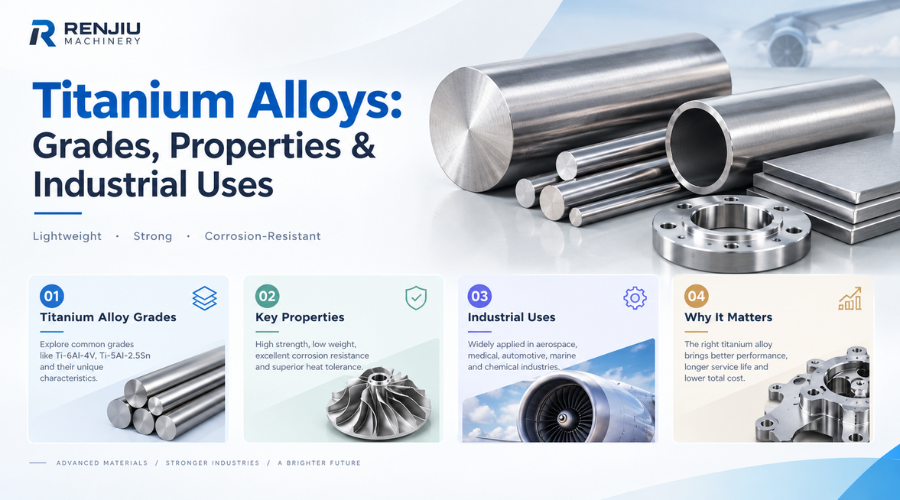
Choosing a titanium alloy is not simply a matter of selecting the strongest material. Each grade offers a different balance of strength, corrosion resistance, formability, and cost. The right choice depends on what the component must withstand, how it will be manufactured, and which material specification the project requires.
This guide explains how titanium alloy grades are classified, what properties distinguish them, and where common grades are used. It also outlines a practical way to narrow down options before you request a quote for wholesale titanium alloy parts.
Titanium alloys use titanium as the core metal, combined with other elements to adjust their performance. Common elements combined with titanium include aluminum, vanadium, molybdenum, and many others, depending on the alloy. These additions affect the strength, weight, formability, and how the resulting alloy performs at different temperatures.
Titanium alloys are different from commercially pure titanium. Commercially pure grades contain very little alloying material and are often chosen for their corrosion resistance and formability into different shapes. Alloy grades are engineered for specific industrial performance needs. For example, Grade 5 is alloyed with aluminum and vanadium to provide high strength.
Titanium alloys are commonly classified by grade. Commercially pure titanium includes Grades 1 through 4.
Titanium alloys are often grouped by their structure into three broad categories:
These categories help describe general material behavior. But for a specific industrial application, it is crucial to check the specific grade's datasheet and specification for suitability.
| Titanium Grade or Alloy | General Characteristics | Industrial Uses |
|---|---|---|
| Grade 1 | High formability and corrosion resistance; relatively low strength | Chemical processing and formed components |
| Grade 2 | Balanced strength, formability, and corrosion resistance | Industrial equipment, marine, and chemical applications |
| Grade 3 | Higher strength than Grades 1 and 2, with less formability | Components requiring added strength |
| Grade 4 | Highest strength among the commercially pure grades | Industrial and medical components |
| Grade 5 (Ti-6Al-4V) | High strength-to-weight ratio; widely used across industries | Aerospace, medical, and high-performance components |
| Grade 23 (Ti-6Al-4V ELI) | Enhanced ductility and fracture toughness compared with standard Grade 5 | Medical implants and specialized applications |
The table is a starting point, not a substitute for a project specification. Confirm the required chemistry, mechanical properties, product form, and standard before placing an order.
Many titanium alloys provide a combination of substantial strength and low weight. These physical properties make them valuable for industrial requirements where reducing component weight improves performance. One example is aircraft, where lighter weight improves operational performance.
Titanium alloys also form a stable surface oxide layer that helps protect them from corrosion. However, "corrosion-resistant" in this case does not mean suitable for every chemical or service condition. Assuming this without checking the alloy's compatibility against the actual operating environment is a serious mistake.
Titanium alloys do not all behave the same way when exposed to high or low temperatures. Some grades are better suited to particular temperature ranges, but continuous heat exposure will affect the strength of most titanium alloys. If you intend to use titanium in any industrial application, the safer approach is to confirm the alloy's limits against the expected operating conditions.
Specially selected titanium grades are used in medical devices and implants because they can remain sterile and are also corrosion resistant. Suitability of titanium alloys in the medical sector usually depends on multiple factors, such as the grade and applicable medical regulatory requirements.
An alloy grade that performs well in the industry also needs to be fabricated using a specific method. Titanium, being a hard metal, presents machining challenges such as heat buildup and tool wear. Moreover, some grades are easier to form than others. So, during material selection, manufacturing requirements need to be given high priority when choosing the correct grade.
Titanium alloys tend to be expensive. They cost more than many common metals. Processing titanium in a titanium alloy parts factory is also not easy, as it requires experienced suppliers and suitable equipment. Some applications may also need attention to galling, joining, or surface treatment. These factors do not rule out titanium, but they should be included in the project's cost and production planning.
| Property | Titanium Alloys | Aluminum Alloys | Stainless Steel |
|---|---|---|---|
| Weight | Low relative to strength | Very low | Generally higher |
| Strength | High in many grades | Varies by alloy | High in many grades |
| Corrosion resistance | Strong in many environments | Depends on alloy and exposure | Depends on grade and environment |
| Cost | Often higher | Often lower | Varies |
| Common selection factor | Strength with weight savings | Low weight and cost efficiency | Durability and broad availability |
There is no universal winner. Aluminum may be a better fit when low weight and cost are priorities. Stainless steel may suit projects that need durability and broad availability. Titanium becomes compelling when its particular combination of strength, low weight, and environmental performance addresses a clear design need.
| Industry or Application | How Titanium Alloys Are Used | Why They Are Selected |
|---|---|---|
| Aerospace | Structural parts, fasteners, and engine components | Strength-to-weight performance and suitability for demanding conditions |
| Medical | Implants and surgical instruments made from suitable grades | Biocompatibility and corrosion resistance |
| Chemical processing | Vessels, heat exchangers, and piping components | Corrosion resistance in selected chemical environments |
| Marine | Components exposed to seawater | Corrosion resistance in appropriate service conditions |
| Automotive and motorsports | Performance parts and lightweight components | Potential weight savings and strength |
| Energy and power generation | Specialized equipment and components | Performance requirements in demanding operating conditions |
| Consumer products | Sporting goods and other premium lightweight products | Strength, low weight, and durability |
Use a practical selection process:
Titanium alloy grades offer different combinations of properties. Commercially pure Grades 1–4 and alloy grades such as Grade 5 and Grade 23 serve different needs.
Grade 2 and Grade 5 are common options, but neither is universally best. Your task is to match the grade to the component's operating environment, performance targets, and manufacturing process. That gives engineers and buyers a sound basis for selecting the right material to ensure final product quality.
Grade 5, also known as Ti-6Al-4V, is one of the most widely used titanium alloys. It is valued for its strength-to-weight ratio and is used in aerospace, medical, and other high-performance applications.
Grade 2 is commercially pure titanium, commonly selected for a balance of formability and corrosion resistance. Grade 5 is an alloy designed for higher strength. The right choice for buying wholesale titanium alloy parts depends on the component's requirements and manufacturing route.
Many titanium grades offer strong corrosion resistance, but performance depends on the specific grade and environment. Check the alloy against the chemicals, temperatures, and service conditions it will encounter.
Choosing a titanium alloy is not simply a matter of selecting the st
READ FULLCNC Milling Parts supplier, wholesale CNC Milling Parts
READ FULLAmong amateur metal machinists and engineers, ther
READ FULL

Have a question or need a quote? Fill out this form and our team will get back to you quickly!