



 +86 18368240367
 Jasonhardware@foxmail.com

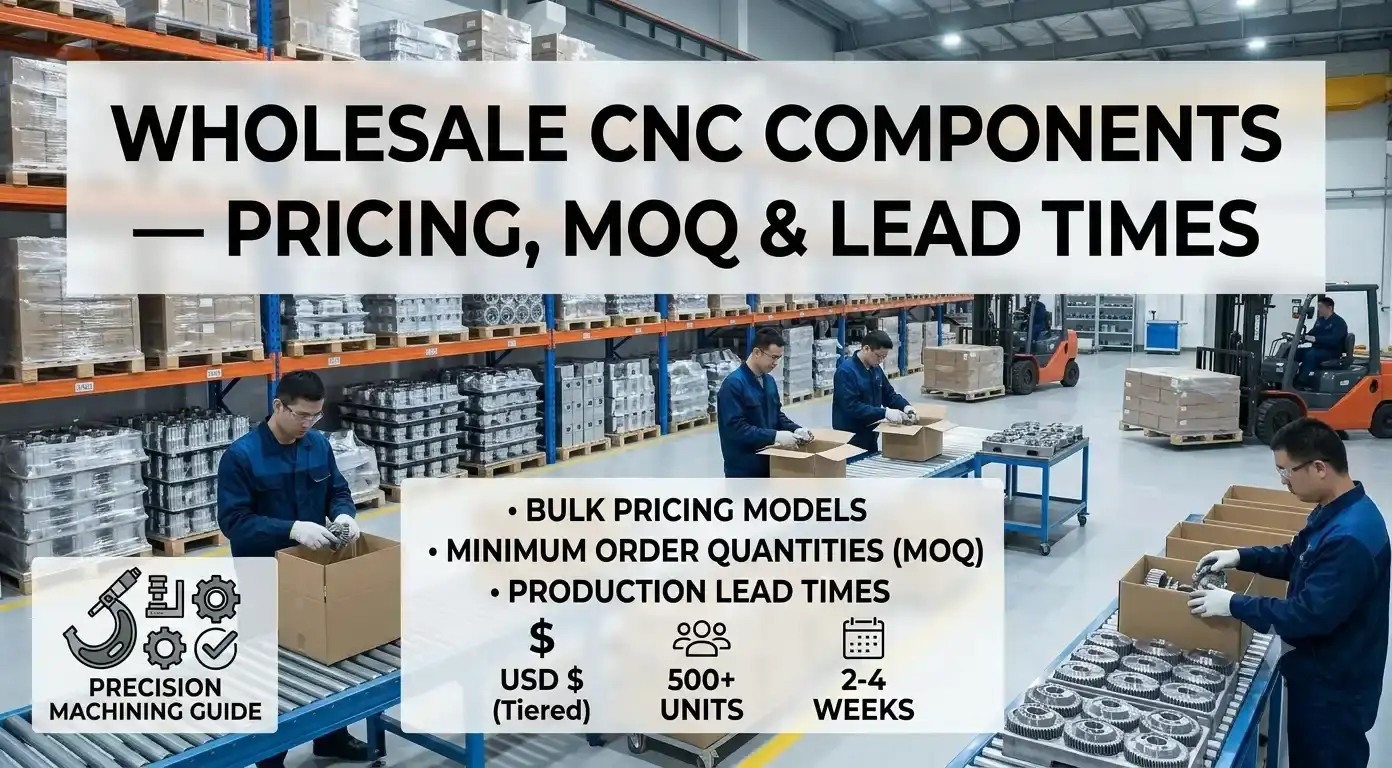
The production of any item depends on the physical features of that product. When we talk about CNC components, they are usually compact parts with simple or complex dimensions. Their production cost depends on various factors, and each factor affects the final price of the order. When selecting a wholesale manufacturer of CNC components, buyers have to look at the primary and secondary factors that affect the overall cost of production. There is a simple formula that is followed by industries globally, and you can estimate the wholesale supply of CNC components in this industry. It will help every buyer when placing bulk orders.
Every order of wholesale CNC components depends on the CNC machining cost formula. That is the primary step in the production process that evaluates the total cost of production. This formula covers every variable and secondary cost for the estimated total cost a manufacturer has to bear. Then the manufacturer decides the price accordingly, and many other factors also affect it.
Formula
Total cost = Material cost + setup cost + machining time cost + finishing cost
The kind of material a manufacturer uses affects the cost of production. It also depends on the requirements of buyers because a buyer’s affordability is what matters the most here. What a buyer can afford comes first, because then a manufacturer analyzes the total cost. It includes the setup cost when going for the production of wholesale CNC components. How much time each unit takes and how much machining energy is being used all contribute to it. Here is a breakdown of these costs in a well-detailed form.
Manufacturers use different materials for the production of wholesale CNC components. Aluminum, brass, copper, steel, stainless steel, and titanium are the most common materials in the CNC machining industry. Aluminum is the cheapest metal in the list, and titanium is the most expensive one. The cost of metal affects the production cost, and the material cost is all about this factor.
Most CNC parts are made of stainless steel because it is more affordable, durable, and also heavy-duty. Titanium is not easy to machine, and it is very expensive compared to stainless steel. So, having titanium CNC parts will be very costly and time-consuming. If manufacturers go for aluminum parts, they are easy to machine, cheap, but have less strength than stainless steel. The material selection is the first pillar of CNC machining, and it has a major impact on the production cost.
Then we look at the machining time cost, which affects the total production cost. It affects the labor cost and machining cost. The longer the time a machine takes, the longer the laborer has to work. It affects the total production cost.
Formula
Machining cost = Machining time x hourly rate
When sourcing wholesale CNC components, buyers have to select the material because the machining time depends on it. Titanium takes more time, and it is also expensive. Aluminum is quick to machine and cheap. So, the machining time cost depends on the material type. Also, it affects the tools of CNC machines, because a tougher metal will wear down the tool faster. It will increase the production cost and time.
Setup cost includes lots of factors like batch size selection, machine selection, programming, and tooling. Simple parts require simple CNC machines and less setup time. Complex parts require multi-dimensional machines and more time for setup.
Formula
Setup Cost = Production Cost/number of units
The setup cost contains the concept of economies of scale in simple production. If the CNC parts require simple designs, their production time and cost are lower after the breakeven point. The larger the units are, the lower the per-unit cost will be. This method is common when the CNC machining is not a multi-axis one.
When producing wholesale CNC components, the setup cost includes the tooling, programming, and batch size selection. Manufacturers have to select the number of units they have to manufacture for the buyer, and that helps them estimate the setup cost. The number of machines, laborers, working hours, and materials they need is directly proportional to these factors.
Then the finishing cost needs attention, where each CNC component requires coating or anodizing. These coats prevent corrosion and offer a better appearance to CNC parts. Buyers get an option from manufacturers about the colored or transparent coats. The kind of finishing coat a buyer selects also affects the cost of production. Some coats are cheap, and some are expensive depending on the quality they offer.
Then come the secondary factors that affect the cost of CNC parts production. They are about the type of machining and the detailing a part needs in production. As we have discussed earlier, simple machining is low-cost compared to complex machining. So, here is everything in detail when we talk about secondary factors of production.
CNC turning operations are simple and offer a low-cost solution compared to multi-axis machining. The selection of the machine depends on the type of CNC components a buyer wants. If the components require turning machines, the cost of production will be less than the other methods.
If the components have complex designs, they will need multi-axis CNC machines. Those CNC machines have advanced movements, automatic tool selection, and a higher cost of production. They are not suitable for large-scale production. That is why the production cost with CNC turning machines is less than that of multi-axis machines. A manufacturer can follow the economies of scale method in simple machining, but will be limited to low or medium batch sizes in complex machining.
Then we have the tolerance rate, which also affects the production cost of wholesale CNC components. A higher tolerance rate takes more energy and time, which means the production cost will be higher. It happens in complex parts, and this is why machines need more frequent replacement of tools in the production process. Also, there is a risk of fracture and deformity in high-tolerance materials, which is why the cost of such CNC components increases. They are prone to more damage during production, and the manufacturer bears more costs in production.
On the other side, parts that are simple and easy to machine need a standard tolerance rate. They do not increase risk of tool wear and overheating, which is why the production cost is less in simple CNC components. The usual range of tolerance is from ±0.005 inches to ±0.010 inches. However, some manufacturers reach the tolerance rate of ±0.0005, where extreme tolerance is mandatory. It all depends on the requirements of the buyer, and the manufacturer has to be precise with it.
The price, MOQ, and lead time depend on all the costing factors you have read above. Each factor affects the price, discounts, MOQ level, and lead time. Simple CNC components require shorter lead times, lower MOQs, and are usually more cost-effective than customized ones. The more complex a CNC part is, the more lead time it will require. That makes the entire order follow the same lead time, and the per-unit cost affects the final price.
Procuring custom wholesale CNC components requires larger MOQs because the per-unit cost of production is higher in low volumes of production. So, manufacturers fix MOQs in custom productions where they can generate profitable revenues. Many Chinese manufacturers of CNC components have an advantage in offering affordable prices, customization, and reasonable MOQs together. They even manage to keep the lead time less than the usual lead times.
Wholesale CNC components seem to be simple in bulk production, but there are lots of costs involved. Material, machining, setup, and finishing costs are part of the production, which make up the total cost of production. Besides, the design of the part and the tolerance rate affect the production cost mainly, where the lead time also increases if the complexity is high. All these factors affect the price, MOQ, and lead time of CNC components. Buyers have to search for manufacturers as per the per-unit price, MOQ, and customization they need. Mostly, Chinese manufacturers have an advantage in maintaining a low cost of production because of their economies of scale.
Do Complex CNC Parts Require More Lead Time?
Yes, complex CNC parts require more lead time and cost. They are more challenging components, and multi-axis CNC machining methods work well in them. It increases the cost of production, which is why the lead time extends compared to simple CNC parts.
What is the Effect of the Number of Units on Production Cost in CNC Machining?
The economies of scale method makes the larger production size more cost-effective. This is why many manufacturers go for a larger number of units in production to reduce the per-unit production cost. In CNC machining, this method is more successful in simple CNC parts that need less detailing, time, and cost. However, if a CNC part is complex, a higher number of units will only increase the production cost.
Do CNC Machines Have Different Production Costs for Each Machining Method?
Yes, simple CNC machines have a lower cost of production compared to multi-axis CNC machines. Turning CNC machines provide a low-cost production and simple detailing. While multi-axis CNC machines are best for complex designs, their cost of production per unit is higher. That is why simple CNC machining is best for economies of scale, and complex machining is suitable for small or medium-sized production.
Where Can I Find Wholesale CNC Components at a Low Price?
You can find wholesale CNC components at a low price from many Chinese suppliers. They are usually available on B2B platforms like Alibaba.com, Tradewheel.com, and Made-in-China.com. Besides, you can try Ningbo Renjiu Machinery Co., Ltd., which has a low-priced supply of CNC components.
How to Procure Wholesale CNC Components with Customization?
Search for custom CNC components on B2B platforms or on Ningbo Renjiu Machinery Co., Ltd. You can find a customized solution at a lower price with worldwide supply.
If you source precision
READ FULLIf you’ve ever opened a quote for a titanium part and felt shocked to see the excessive pri
READ FULLEvery day, procurement teams across various industries like aerospace, medical devices, and indus
READ FULL

Have a question or need a quote? Fill out this form and our team will get back to you quickly!