



 +86 18368240367
 Jasonhardware@foxmail.com

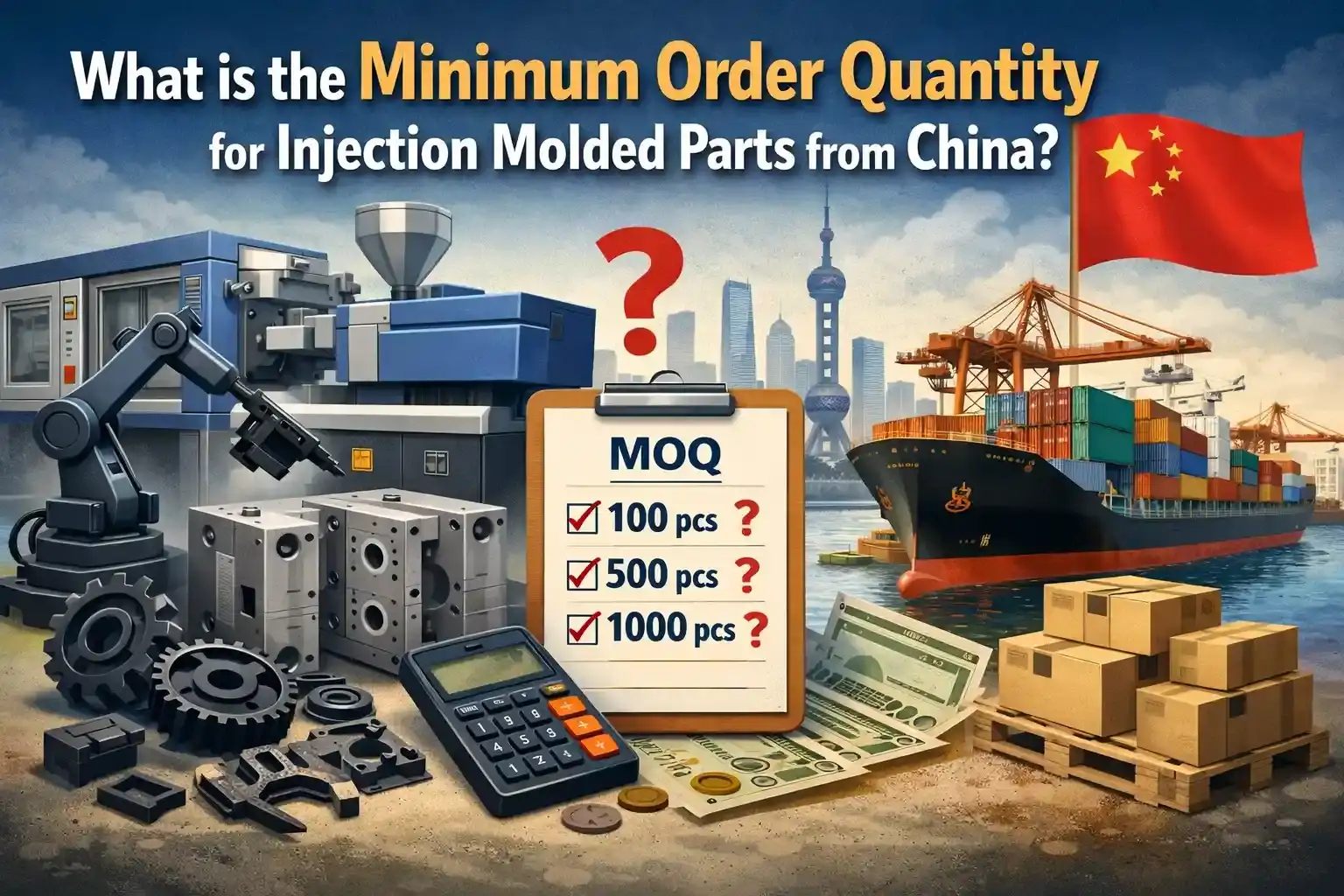
Many industrial terms are not easy to understand for a person who has very little idea about bulk production. Lots of types of production costs are part of the final price, where each element contributes to it. All these factors affect the minimum order quantity, and China has the biggest advantage in it. Chinese manufacturers can maintain low MOQ when many global manufacturers struggle to do so. It is because of economies of scale since per unit cost becomes very low. To meet that low per-unit cost, massive units need to be manufactured, and that factor affects the MOQ levels. This is what you will find in this blog when you further explore it.
The MOQ limit is the lowest only in one case, and it is a prototype. When buyers need a sample or a prototype in custom design, the MOQ is usually a single unit or a few units only. There is a reason behind it, and that is the special service provided by OEM service providers, mostly. These bulk manufacturers have capacity to manufacture a single unit, but its cost is usually higher than per unit cost in large orders.
Even traders or small manufacturers have this service depending on their cost-bearing strength. If they can bear this cost, buyers can get a few units in prototype service.
Trading companies have partnerships with bulk manufacturers. Such partnerships provide them an advantage in sourcing fewer units at a reasonable price from manufacturers. Therefore, these trading companies can meet the low MOQ requirements of buyers. The reason is the production cost per unit, and lower MOQs are not profitable for massive manufacturers.
Such MOQ range goes from 100 units to 500 units, usually. Since bulk manufacturers do not provide their service for such small units in most cases, buyers choose trading companies for that. These companies manage to provide affordable supply of injected molded parts in low MOQs like 100s of units.
When it comes to larger units like 5000 or even 50,000 injected molded parts, this is where a bulk manufacturer comes. These giants are OEM/ODM service providers who deal only in massive production. It is about the per-unit cost, and larger production units lead to better profits for these suppliers. Therefore, they deal mostly in more than 1000 or 5000 units of injection-molded parts.
Their range goes even higher in some cases. It is about the massive orders from wholesalers and distributors. OEM service providers do not even cater to low MOQs in most cases. Until the product is rare or they deal in a niche industry, they do not work on medium or small MOQs.
Again, it is about the per-unit cost that they have to keep at a profitable level. A hundred or thousand units are not profitable for these giants. This is why they fix high MOQs to make sure they generate profits.
There are many secondary factors that affect the MOQ selection of plastic injection-molded parts. These factors are about the design complexity, material cost, machinery cost, mold cost, etc. The production cost is usually low in standard or simple parts compared to complex or custom parts. Similarly, the value addition or material quality affects the cost of production. Find all the following factors in detail below.
There are over seven types of plastic in the industry, and their physical characteristics differ from each other. Some are very cost-effective, and some are costly. The production cost is directly impacted by these plastic types. Here are both types that will make you understand this concept better.
PP, LDPE, HDPE, and ABS are low-cost and standard plastic types. Most injection-molded parts are made of these types. These types are easily available, moldable, and very cost-effective for manufacturers. Having low MOQs is possible in these injection-molded parts compared to other types that are costly. The production cost per unit is very low in it, and they also need simple designs in most cases. The molding cost and material cost contribute to enabling lower MOQs.
Then some costly plastic types exist, and they are way better in terms of physical features. They are PEEK, PC, and nylon, and buyers choose their injection-molded parts for special installations. Their impact resistance, chemical resistance, and appearance are much higher than those of the low-cost plastic types. That is why they are costlier, and the per-unit cost is higher in them. Until a manufacturer goes for large volumes, depending on conditions, it is not easy to offer low MOQs.
However, OEM service providers have capacity to maintain low per unit cost when they go for much higher MOQs.
The simpler the mold is, the more cost-effective it will be. The production cost per unit also depends on the complexity of the mold. Plastic injection-molded parts with simple designs are more in demand and cause less production cost. It is easier to offer low MOQs in simple molds than in complex molds.
In addition, manufacturers use single-cavity, multi-cavity, and family-mold types. They all have different pros and cons, and manufacturers use them accordingly. In custom designs or complex parts, single-cavity molds are more useful. In standard designs and large volumes, multi-cavity molds work the best. Family-cavity molds work the best when multiple designs are required together in a set. This mold type is cost-effective where a set of different-design parts is needed in a single molding process.
The machinery, tooling process, and everything related to them also affect the production cost. Mega manufacturers have a variety of machines, which gives them an advantage in producing various kinds of injected molded parts together. A small manufacturer has limited setup, where it could require outsourcing custom or complex production types. This setup cost also affects the per-unit cost of parts. Likewise, tooling cost is about the type of mold and its production cost. In custom production, special molds are manufactured, which means the MOQ size will have to be large enough to make per unit cost profitable.
Switching the color of injection-molded parts during production affects the cost of production. It increases the production time and requires preparation efforts for the next color. Likewise, the additives are used to increase the resistance level of injection-molded parts. These additives increase the per-unit cost. To increase the density, chemical resistance, flame retardance, and color intensity, additives are used. They surely affect the per-unit cost of production. Then the manufacturer increases the MOQ if the per-unit cost is not profitable. That MOQ increases until the per-unit cost becomes desired and profitable.
Chinese manufacturers have been ruling the industry for some decades. They have cost-effective production, which comes from economies of scale. That advantage makes them the industry leader also in plastic injection parts. Global buyers of different sizes approach them with different order sizes. This is where the MOQ factor shows its impact on affordability. Lots of factors affect MOQ, and it depends on the production capacity of a manufacturer. The mold design, plastic type, machinery cost, and lots of factors contribute to it.
How Do Chinese Suppliers Decide the MOQ of Injection Molded Parts?
They decide it on the basis of per-unit cost. Simple and low-cost plastic injection-molded parts are usually available in low MOQs. Custom designs require high MOQs to match a profitable per-unit cost.
What are the Factors That Affect the MOQs of Injection Molded Parts?
Plastic type, mold design, per-unit cost, tooling cost, switching color cost, and additive cost affect the MOQs. They all contribute to the per-unit cost, and if the cost reaches the profitable amount, the MOQ becomes manageable.
Do Custom Injected Molded Parts Require Higher MOQs?
Yes, custom parts require high MOQs because their production cost is higher. Their custom molds are expensive, and that is the biggest factor that affects the MOQ. Standard designs are usually available, which is why their MOQs are low.
If you source precision
READ FULLIf you’ve ever opened a quote for a titanium part and felt shocked to see the excessive pri
READ FULLEvery day, procurement teams across various industries like aerospace, medical devices, and indus
READ FULL

Have a question or need a quote? Fill out this form and our team will get back to you quickly!